
FEBRERO / FEBRUARY 2026. 250 ANIVERSARIO DE LA CONTRIBUCIÓN DE ESPAÑA A LA INDEPENDENCIA DE EEUU
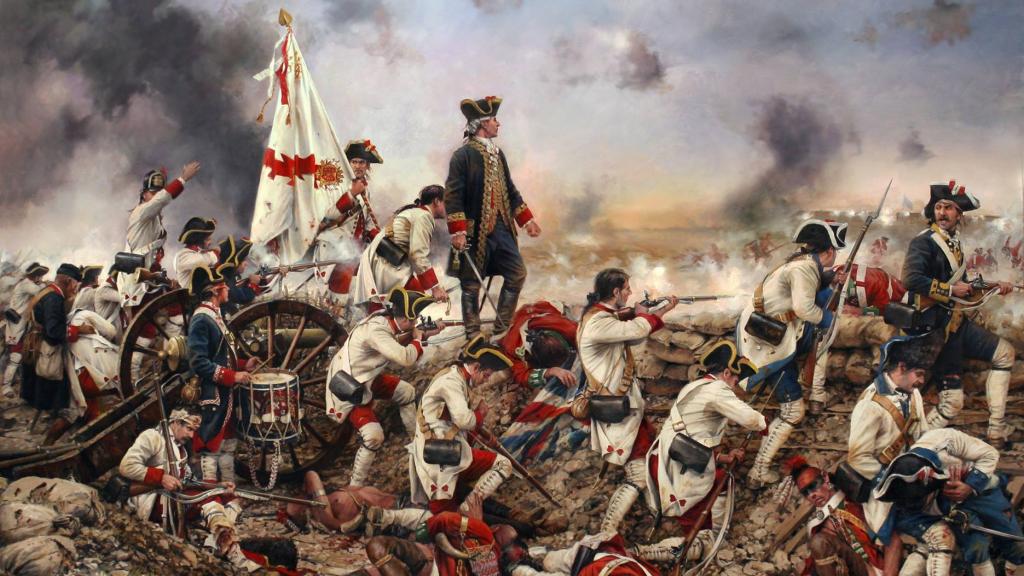
FEBRERO / FEBRUARY 2026. 250 aniversario de la contribución de España a la independencia de EE.UU. Bueno, pues vamos a aprovechar este magnífico cuadro del pintor de batallas Ferrer Dalmau, que representa a D. Bernardo de Gálvez en la conquista de Pensacola, para celebrar que se cumple el 250 aniversario de la contribución de España a la independencia de EE.UU. y recordar la figura de este insigne militar, al que se puede considerar como máximo exponente de dicha contribución. Desde el cargo de gobernador de la Luisiana fue uno de los principales responsables de gestionar el apoyo económico y material del gobierno español a las colonias rebeldes y, tras ser nombrado jefe de las fuerzas militares españolas en el Caribe, fue el responsable de la conquista militar de toda la Florida, entonces en manos de los ingleses, en la campaña que culminó con la toma de Pensacola, permitiendo mantener el apoyo logístico español a través del río Misisipi a las fuerzas de las Trece Colonias. La toma de esta última ciudad tuvo éxito gracias a la valentía de D. Bernardo de Gálvez, que penetró en solitario con su buque “Galveston” en la bahía de Pensacola. De ahí el lema “Yo solo” que se puede leer en su blasón. Las fuerzas británicas se rindieron el 10 de mayo de 1781, capturándose más de 1.100 prisioneros, 150 cañones y numeroso material. Siglos después, y gracias a la extraordinaria labor desarrollada en Washington por la ciudadana española Teresa Valcarce, se consiguió que el 9 de diciembre de 2014 quedara colgado en el Capitolio un retrato de D. Bernardo de Gálvez, cumpliéndose así el acuerdo tomado en 1783 por el Congreso norteamericano a propuesta de Oliver Pollock. Días después, el presidente Obama firmó su nombramiento como Ciudadano Honorario de los Estados Unidos, en reconocimiento a la decisiva ayuda que en nombre de España prestó a la Revolución Americana. Pues eso, que siempre ha habido en nuestra historia de España grandes hombres que, con pocos medios, pero con sacrificio, iniciativa y voluntad de vencer, han sabido superar las mayores dificultades en la defensa de España y de sus intereses. Well, let’s take advantage of this magnificent painting by the Spanish battle painter Ferrer Dalmau, depicting D. Bernardo de Gálvez in the conquest of Pensacola, to celebrate the 250th anniversary of Spain’s contribution to the independence of the United States and to remember the figure of this distinguished military leader, who can be considered the foremost exponent of that contribution. As governor of Louisiana, he was one of the main figures responsible for managing the economic and material support provided by Spain to the rebellious colonies. Later, as head of the Spanish military forces in the Caribbean, he led the campaign that resulted in the conquest of all of Florida, then under British control, culminating in the capture of Pensacola and securing Spanish logistical support through the Mississippi River to the forces of the Thirteen Colonies. The success of the campaign was largely due to Gálvez’s bravery, as he entered Pensacola Bay alone with his ship “Galveston”. Hence the motto “Yo solo” that appears on his coat of arms. The British forces surrendered on May 10, 1781, with more than 1,100 prisoners, 150 cannons, and substantial military supplies captured. Centuries later, thanks to the extraordinary efforts carried out in Washington by the Spanish citizen Teresa Valcarce, a portrait of D. Bernardo de Gálvez was hung in the Capitol on December 9, 2014, thus fulfilling the agreement adopted in 1783 by the American Congress at the proposal of Oliver Pollock. Shortly thereafter, President Obama signed his appointment as an Honorary Citizen of the United States, in recognition of the decisive help he provided to the American Revolution on behalf of Spain. History reminds us that Spain has always had great men who, with limited resources but with sacrifice, initiative, and determination, have overcome the greatest difficulties in defense of their country and its interests.
OCTUBRE / OCTOBER 2025. Úbeda y Baeza.
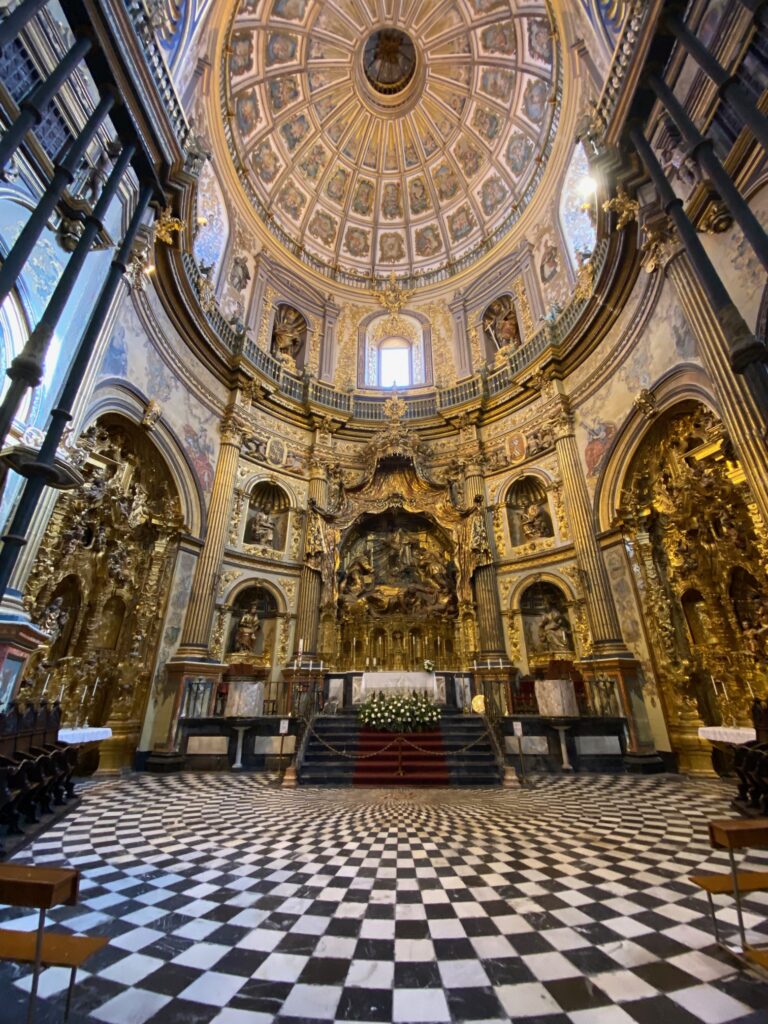
OCTUBRE / OCTOBER 2025. Úbeda y Baeza Bueno, pues este mes, de la mano de un amigo ubetense hemos tenido la suerte de visitar en la provincia de Jaén, estas dos maravillosas ciudades, ambas rodeadas de campos de olivos sin fin, donde el tiempo se detiene. En ellas, el viajero se sumerge en un paisaje lleno de historia a través de sus monumentos, calles, plazas y casas señoriales, donde el legado de la piedra, los sabores del aceite y sus tradiciones convierten a estas dos ciudades en pura magia. A corta distancia la una de la otra, ambas son declaradas Patrimonio de la Humanidad por la UNESCO en 2003. Dos joyas dignas de más de una visita. Su impresionante arquitectura las convierte en el máximo exponente del Renacimiento español y refleja todo el esplendor de esa época. Un destino cultural de primer nivel en España. En la imagen tenéis el interior de la impresionante Sacra Capilla del Salvador del Mundo, mausoleo mandado construir por D. Francisco de los Cobos, secretario de Carlos I, proyecto del burgalés Diego de Siloé y realizada, a partir de 1540, por el arquitecto Andrés de Vandelvira, autor de los más soberbios monumentos de ambas ciudades. Casi ná. Well, this month, guided by a good friend from Úbeda, we were lucky enough to visit these two amazing cities in the province of Jaén, both surrounded by endless olive groves where time seems to stand still. In them, the traveler is immersed in a landscape steeped in history through their monuments, streets, squares, and nobility manors, where the legacy of stone, the flavors of olive oil, and their traditions transform these two cities into pure magic. Located a short distance one each other, both were declared World Heritage Sites by UNESCO in 2003. Two gems worthy of more than one visit. Their impressive architecture makes them the finest examples of the Spanish Renaissance and reflects all the splendor of that time. A top-tier cultural destination in Spain. The image shows the interior of the impressive Sacra Capilla del Salvador del Mundo, a mausoleum commissioned by D. Francisco de los Cobos, secretary of the king Charles I, designed by Diego de Siloé from Burgos and built from 1540 onwards by the architect Andrés de Vandelvira, author of the most magnificent monuments in both cities. Quite something, huh?
JUNIO / JUNE 2025. Granada radiante.

Bueno, si bien Granada es espectacular todo el año, no hay duda de que el mes de junio es realmente uno de los más intensos en esta ciudad. Entre la celebración del Corpus Christi con su feria y el festival de Granada con sus múltiples actuaciones y representaciones en distintos emplazamientos al aire libre, la ciudad se vuelve vibrante. Este mes tuvimos la oportunidad de ver al Ballet Flamenco de Andalucía en el Palacio de Carlos V en la Alhambra, bajo un maravilloso cielo estrellado del mes de junio. Una noche remarcable en un marco único. ¡Cualquier excusa es buena para subir a la Alhambra, ha, ha…! —————oo0oo————— Well, although Granada is spectacular year-round, there’s no doubt that June is truly one of the bustliest months in this city. Between the Corpus Christi celebrations with its fair and the Granada Festival with its many performances and shows in various open-air venues, the city gets vibrant. This month we had the opportunity to watch the Andalusian Flamenco Ballet at the Palace of Charles V in the Alhambra premises, under a wonderful starry June sky. A remarkable night in a unique setting. Any excuse is a good one to go up to the Alhambra, ha, ha…!
MAYO / MAY 2025. Castillo de Burgalimar.

Bueno, pues este mes nos hemos acercado a Jaén, la provincia con más castillos de España, para visitar el castillo de Burgalimar (Bury al-Hamman) en Baños de la Encina, en plena Sierra Morena. Pues resulta que dicen que este es el castillo más antiguo de España y posiblemente de Europa, siendo acabada su construcción en el año 968, en tiempos del Califa cordobés Al Hakam II, y después de distintas vicisitudes, fue conquistado finalmente por el rey Fernando III el Santo en 1225. Ni más ni menos… Con una gran muralla con 14 torreones, está construido utilizando tapial, un tipo de adobe elaborado a base de arcilla, arena, cal y piedrecitas. Y es por ello que ha llegado hasta nuestros días en un estado excepcional de conservación. Pero, además, el pueblo donde se encuentra, Baños de la Encina, no se queda atrás, pues se le tiene como uno de los más bonitos de Jaén. Así que una visita a todo el conjunto es altamente recomendable. Pues eso, conociendo España a través de sus castillos. —————oo0oo————— Well, this month we traveled to Jaén, the province with the biggest number of castles in Spain, in order to visit Burgalimar Castle (Bury al-Hamman) in Baños de la Encina, in the heart of Sierra Morena. It is said to be the oldest castle in Spain, and possibly in Europe. It was completed in 968, during the reign of the Cordoban Caliph Al-Hakam II, and after different vicissitudes, it was finally conquered by King Ferdinand III the Saint in 1225. No more, no less… With a great wall with 14 towers, it was built using rammed earth, a type of adobe made from clay, sand, lime, and pebbles. That’s why it has survived to this day in an exceptional state of preservation. But the town where it’s located, Baños de la Encina, is not far behind, as it is considered one of the most beautiful towns in Jaén. So a visit to the entire complex is highly recommended. So, that’s it, getting to know Spain through its castles.
DICIEMBRE / DECEMBER 2024. La Mezquita Catedral

Bueno, pues hacía ya mucho tiempo que no pasaba por Córdoba, así que este mes hemos ido a redescubrirla. Resulta que es la única ciudad del mundo con cuatro bienes considerados Patrimonio de la Humanidad por la UNESCO. Y la joya, sin duda, es su Mezquita Catedral. Mezquita construida en el año 786 con Abderramán I, sobre una basílica visigoda existente en el mismo lugar y que en 1236 con la conquista cristiana se transformará en Catedral, incorporando con los siglos, elementos góticos, renacentistas y barrocos, manteniendo los elementos islámicos. Todo ello la dota de una arquitectura impresionante, destacando sus columnas y arcos de herradura sin fin, así como las capillas y el altar mayor que se incorporaron en el Renacimiento y en el Barroco, que contrastan con los elementos anteriores y crean un efecto arquitectónico único. Una joya digna de más de una visita… —————oo0oo————— Well, it’s been a long time since I’ve been to Cordoba, so this month we’ve gone to rediscover it. It turns out that it is the only city in the world with four places considered World Heritage Sites by UNESCO. And the jewel, without a doubt, is its Mosque-Cathedral. A Mosque built in the year 786 under Abd al-Rahman I, on top of a Visigothic basilica previously existing in the same place, and which in 1236 with the Christian conquest was transformed into a Cathedral, incorporating Gothic, Renaissance and Baroque elements but maintaining the Islamic elements. All this gives it an impressive architecture, highlighting its endless columns and horseshoe arches, as well as the chapels and the main altar that were incorporated in the Renaissance and Baroque periods, which contrast with the previous elements and create a unique architectural effect. A gem worthy of more than one visit…
Septiembre / September 2019. Arte y Milicia.

Este mes, una vez mas, he vuelto a disfrutar de la posibilidad de dibujar «en condiciones de combate». Esta vez desde un helicoptero “Chinook” en algun lugar del mundo. ¡Una sensación unica! Si bien las condiciones dentro de un helicoptero en ese tipo de vuelo distan mucho de ser las mejores para el arte, por otra parte son esas mismas condiciones las que convierten ese momento en algo unico y ese dibujo en algo especial. Un dibujo lleno de magia… Un nuevo ejemplo de la combinacion de arte y milicia. ———————–oo0oo————– This month, once again, I have have had the chance to make drawings «in combat conditions». This time I did it from a helicopter «Chinook», somewhere in the world. A unique feeling! Although conditions inside a helicopter in such a flight are far from being the best for the practice of art, on the other hand, these same conditions are what make out of that moment something unique and turn that drawing into something special. A squetch full of magic … A new example of the combination of art and militia.
Julio / July 2019. Contad lo que fuimos.

La técnica avanza que es una barbaridad…! Asi que aprovecho este pequeño video que he sido capaz de hacer (con un poco de ayuda de una joven estudiante de comunicación y publicidad) para, de alguna manera, ayudar a “Contar lo que fuimos” y al mismo tiempo mostrar la evolucion de una de mis acuarelas. Un soldado de los Tercios de Flandes con una musica apropiada sirve para recordar que señores soldados como ese fueron los dueños de Europa durante siglos defendiendo los colores de España. ¡La mejor Infanteria del mundo! ———————–oo0oo————– And this month, a video …! I take advantage of this short video that I was able to assemble (with a little help from a young student of communication and publicity) to, somehow, share what we were able to achieve centuries ago by means of the best Infantry ever and at the same time show the evolution of one of my watercolor soldiers. A soldier of the Tercios de Flandes with a suitable music serves to remember that gentlemen soldiers like this were the owners of Europe for centuries defending the colors of Spain.
Mayo / May 2019. No te sientas vencido aún vencido.

Este mes ha pasado a la reserva un buen amigo guerrillero destinado en el MCOE. Ello me ha dado la oportunidad de hacerle un dibujo de despedida. Aunque ni pasando a la reserva se deja de ser guerrillero… Cuando uno vive el curso de Operaciones Especiales en Jaca y posteriormente pasa por una COE, ya se es guerrillero para siempre, pues esa mentalidad es la que preside todos los actos de tu vida. ¡No te sientas vencido aun vencido! Jeronimo, suerte en tu nueva etapa. ¡No hay a su pie risco vedado! ———————–oo0oo————– This month a close special forces friend has finished his active duty and gone to the reserve. That gave me the chance to make him a drawing. However, no matter if active duty ends since «once special forces, always special forces». Jerónimo, good luck in your new stage.
Abril / April 2019. Museo Cerralbo.

Este mes he tenido la oportundad de visitar la casa museo Cerralbo en Madrid, muy cerca del Madrid de los Austrias, junto al paseo del Pintor Rosales. Llevaba tiempo detras de ello, pero siempre habia dejado pasar la ocasión. ¡Craso error! Una autentica joya, su visita es volver siglo y medio atrás en el tiempo, a la vivienda del XVII marques de Cerralbo, gran coleccionista de objetos de arte y antigüedades. No hay un ricon de la casa que no muestre una obra de arte, ni centimetro en la pared que no tenga un cuadro o tapiz colgado. Una de las maravillosas piezas que alli se pueden ver es esta obra de arte del escultor florentino Luca della Robbia con su sello particular dado por el brillante colorido sus esmaltes asi como la finura y serenidad clasica de los rostros de sus figuras en barro cocido. Algo de lo que se puede disfrutar en pocos lugares. En cuanto pueda vuelvo a visitarla. ———————–oo0oo————– This month I had the chance to visit Cerralbo Museum in the heart of Madrid. This is the house of the XVIIth Marquis of Cerralbo. It has a sumptuous decoration wich reflected the social position of its owners and offers a vision of how the aristocrazy in Madrid lived at the end of the nineteen century. And you can feel it in every inch of the house. Paintings,tapestries, sculptures, magnificent pieces of furniture. All kind of marvels put together in a great house. Among them, one that really caught my attention was this masterpiece of Luca della Robbia, one of the masters of the Renaissance. Something amazing! Worth a visit. I have to revisit it ASAP!
Marzo/March 2019. Fallas.

Hacía ya unos cuantos años que no visitaba las fallas. El haber vivido parte de mi infancia y juventud en la ciudad de Valencia no hay duda de que ha dejado en mi una admiracion por los monumentos falleros y un recuerdo imborrable de aquellas semanas de fallas con las visitas a las mismas, la asistencia sin falta a las “mascletás” de las 14:00 h saliendo a toda prisa del colegio para llegar a la hora a la entonces plaza del Caudillo, hoy plaza del Ayuntamiento y vivir en primera fila ese estruendo inolvidable. Y como no, la degustacion de los ricos buñuelos de calabaza. Pues bueno, este mes he tenido la posibilidad de rememorar aquellos tiempos y de volver a vivir casi todas aquellas experiencias. Aqui podeis ver la falla de la plaza del Pilar, aunque no fue la ganadora del concurso de este año, no deja de ser una autentica maravilla para la vista. Puro arte valenciano. Que pasada… ———————–oo0oo————————- Long time has past since the last time I enjoyed the fair of “Fallas” in Valencia. Having lived part of my childhood and youth in that city, there is no doubt that those memories of the Fallas remain. Visiting those art monuments, attending the noisy «mascletás» at 2:00 p.m. and of course, tasting the delicious pumpkin doughnuts tipical of the city was great at that time. Well, this month I had the opportunity to relive all those experiences spending some days in Valencia. Here you can see the Falla of the Plaza del Pilar. Although this was not the winner of this year’s contest, it was still a real wonder for the eyes. Pure Valencian art. These monuments only last for a week in the streets of Valencia before being burned on the spot, but certainly last forever in the memory of those who visit the city these days.
