
Agosto /August 2021. Paseando por Bucarest
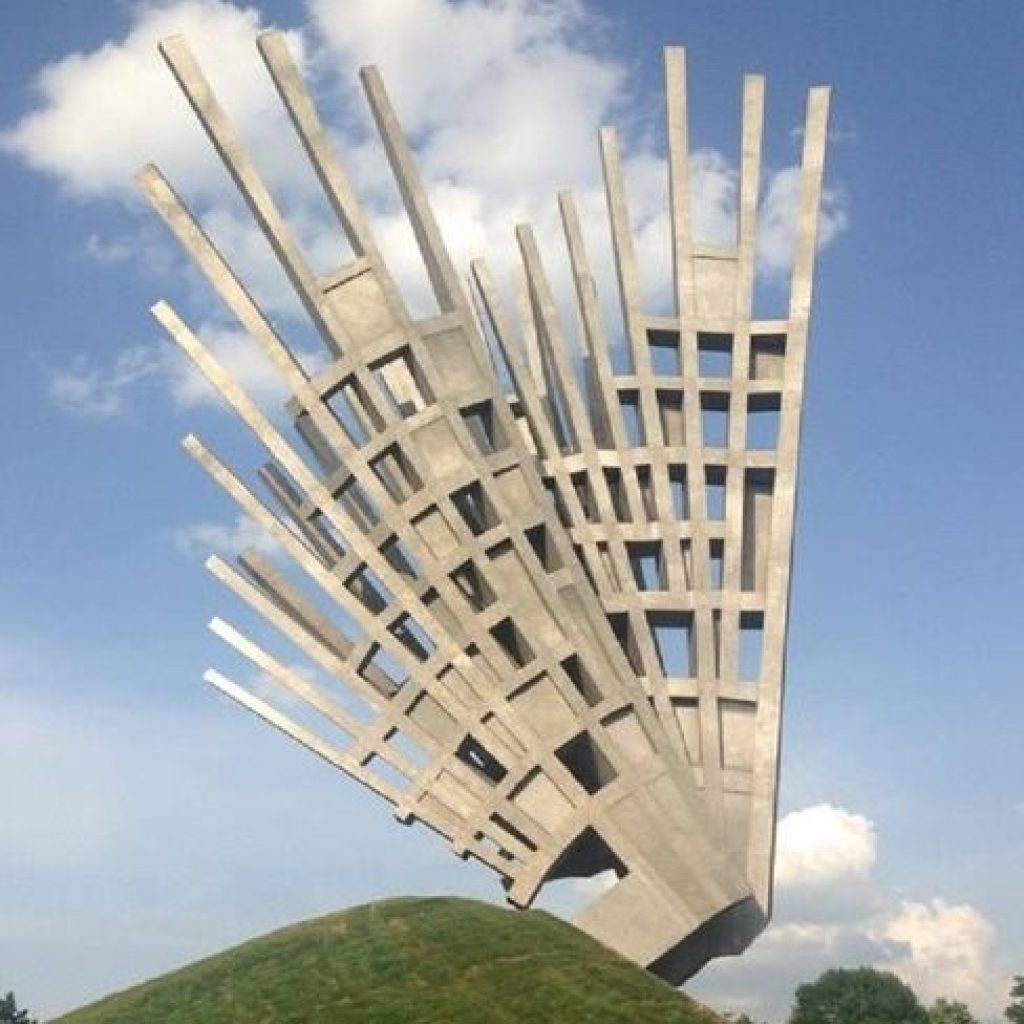
Este mes, paseando por Bucarest, he vuelto a pasar por la “plaza de la prensa libre” y he podido visitar el imponente monumento de las alas que podeis ver en la imagen. Las alas suelen representar a la libertad. Y asi es en este caso, pues resulta que se trata de un monumento levantado a los martires de la resistencia anticomunista caidos en este pais. No es que este memorial sea un caso unico, pues de estos memoriales y cementerios dedicados a los martires anticomunistas los hay por toda Rumania, muchos de ellos en Bucarest. Y es precisamente eso lo que me ha hecho reflexionar. Este pais sufrió uno de los regimenes comunistas-estalinistas mas atroces del mundo durante mas de 40 años, pero en diciembre de 1989, llevado por una ola revolucionaria, el pueblo se levantó contra el dictador. Tras un juicio por genocidio y acumulacion ilegal de riqueza, Nicolae Ceaucescu y su esposa, fueron sentenciados y fusilados. Todo se produjo con una velocidad asombrosa gracias a la union de todo el pueblo rumano para poder acabar con el infierno en el que vivía. Ceaucescu habia sometido al pueblo rumano a la pobreza mas absoluta, habia eliminado por completo la clase media y los habia igualado a todos por abajo, es decir, los habia convertido en el pueblo mas pobre de Europa. Mientras, él nadaba en la abundancia y vivia en su gran mansion, lo que parece ser un denominador comun de los lideres comunistas de todos los tiempos. Hoy en dia, el chalet de Ceaucescu es una de las atracciones turisticas en Bucarest. Su policia secreta (la Securitate) con su vasta red de informadores habia eliminado cualquier disidencia con mano de hierro y habia instaurado el estado del miedo. La poblacion habia perdido toda esperanza de salir de ese agujero negro, pero en 1989, en un acto de valentia extrema y sin nada que perder al carecer de todo, llevo a cabo lo que aquí se conoce como la “Revolucion del 89”. Han pasado casi 32 años y todavia se puede ver la huella social y no decir urbanistica de aquel infierno. De lo que no hay duda a fecha de hoy es que a los rumanos ya no les engañan, pues saben de primera mano lo que significa el comunismo y a donde conduce el mismo. Ademas, dicha realidad se puede decir abiertamente sin miedo. Y por supuesto, sus medios de comunicación bajo ningun concepto se encargan de esconder la realidad. Si señor, unos valientes… —————oo0oo————— This month while walking through Bucharest, I passed by the «square of the free press» and visited the imposing monument of the wings, which you can see in the image. Wings always represent freedom … And this is the case here since it is a monument devoted to the martyrs of the anti-communist resistance who fell in this country. It is not that this anti-comunist memorial is a unique case here, since this kind of memorials and cemeteries abound all over Romania. And that is precisely what has made me reflect. This country suffered one of the most atrocious communist-Stalinist regimes in the world for more than 40 years, but in December 1989, in a revolutionary wave, the people rose up against the dictator. After a trial for genocide and illegal accumulation of wealth, Nicolae Ceaucescu and his wife were sentenced and executed. Everything happened with astonishing speed thanks to the union of all the Romanian people to try to end the hell in which they were living. Ceausescu had subjected the Romanian people to the most absolute poverty, he had completely eliminated the middle class and had equaled them all in the lowest level, that is, he had turn them into the poorest people in Europe. Meanwhile, he lived in large mansions, which seems to be a common denominator of communist leaders of all times. The Ceaucescu chalet can be visited nowadays in Bucharest. His secret police (the Securitate) with its vast network of informants had eliminated any dissent with an iron fist and established the state of fear. The population had lost all hope of getting out of that black hole, but in 1989, in an act of extreme courage and with nothing to lose, it carried out what is known as the «Revolution of 89». Almost 32 years have passed and you can still see the social footprint and not to say urban nightmare of that hell. There is no doubt as of today that Romanians are no longer deceived, because they know first-hand what communism means and where it leads. Furthermore, such a reality can be said openly without fear. And of course, their media under no circumstances are responsible for hiding reality. Yes sir, brave people …
Julio / July 2021. Le musée de l´Armée.
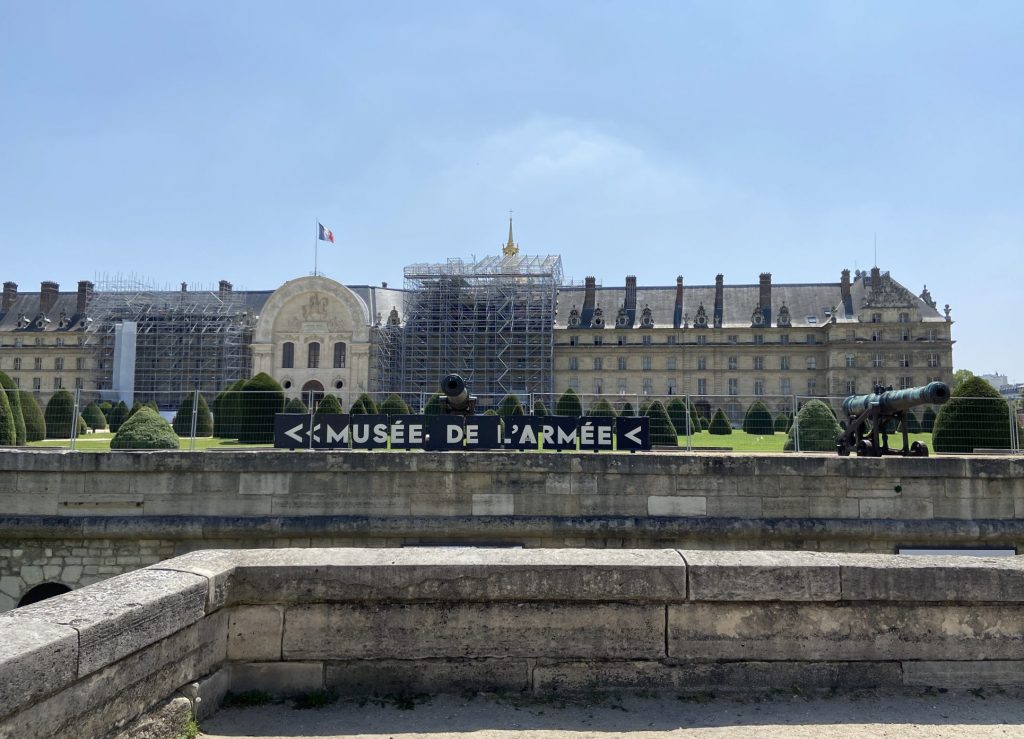
Bueno, pues este mes, aprovechando que el Pisuerga pasaba por Valladolid, he podido visitar el “Musée de l´Armé” en la capital de la France. ¡Ya tardaba! Lo tenía todavía en la lista del debe. Se trata de un moderno museo ubicado en el monumental complejo de Los Invalidos y alberga una de las mejores colecciones del mundo de historia militar. Mi interes principal residia en el area de “armas y armaduras antiguas” que abarca los siglos XIII al XVII. Y es durante los ultimos siglos de este periodo donde, en nuestras continuas guerras con el pais vecino, les zurramos hasta en el carnet de identidad; Ceriñola, Garellano, Bicoca, Pavía (donde apresamos a su rey, Francisco I, ni mas ni menos…), San Quintin, Gravelinas… Una epoca donde la superioridad española era incontestable… Pero a la única batalla que me parecio ver que le dedicaban un espacio, es a la de Rocroi, donde por primera vez, un ejercito frances vencía a un Tercio español. Me ha llamado la atencion el enfoque del museo, siempre desde la grandeza de lo frances, “la Grandeur”, resaltando sus victorias y lo positivo. Es decir, sin complejos… Cuanto tenemos que aprender de los franceses y de su manera de afrontar la historia y la vida. Para ellos, Francia es lo primero. He tenido la oportunidad de vivir en Francia durante un largo periodo, ademas de haber trabajado con franceses en multiples ocasiones y puedo decir sin temor a equivocarme que es un gran pais y un gran pueblo. Y visitando los Invalidos lo he vuelto a comprobar. No me imagino a un ministro de ese pais aventurandose a decir que hay que pensar en cambiar la palabra Patria. ¡Lo echan a patadas …! —————oo0oo————— Well, this month I have had the chance to visit the “Musée de l´Armé” in Paris. It is a modern museum located in the monumental complex of “Les Invalides” and houses one of the world’s best collections of military history. My main interest was in the area of “Ancient weapons and armors» that spans from the 13th to 17th centuries. And it was during the last centuries of this period where, in our continuous wars with the neighboring country, we beat them again and again; Ceriñola, Garellano, Bicoca, Pavía (where we captured their king, Francisco I), San Quintin, Gravelinas … A time when the Spanish superiority was undeniable. But the only battle that I seemed to see that they dedicated a space to it, is Rocroi, happenned in 1643, where for the first time, a French army defeated a Spanish Tercio. The museum’s approach has caught my attention since this approach is always from the standpoint of the greatness of the French, “la Grandeur”, highlighting its victories and the positive. That´s to say; without complexes … We have to learn a lot from the French and their way to face history and life. For them, France comes always first. I have had the opportunity to live in France for a long period, in addition to having worked with French people on multiple occasions and I can say, without fear of being wrong, that it is a great country and a great people. And visiting Les Invalides I have checked it again. I cannot imagine a minister from that country venturing to say that it is necessary to think about changing the word “Patrie”… They kick him out inmediately…!
Junio / June 2021. La vida en el campo es la vida mejor.
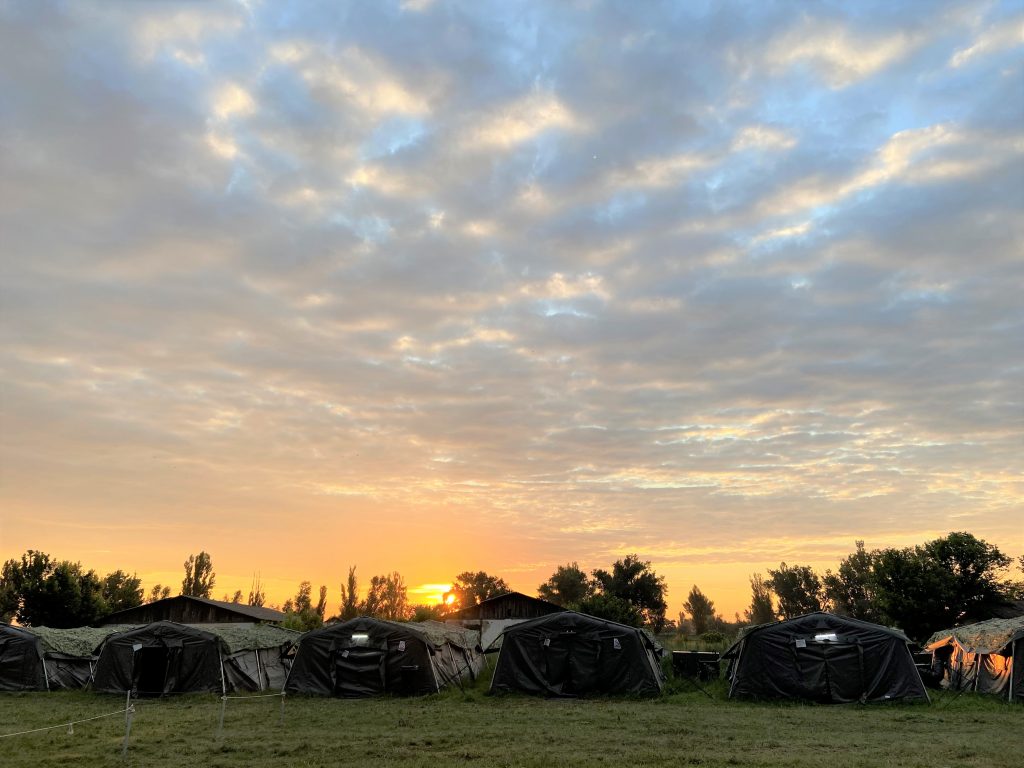
Bueno, pues este mes he tenido la posibilidad de pasar quince dias de un tirón en el campo. El motivo ha sido el ejercicio de OTAN “Steadfast Defender 21”, que ha reunido en Rumanía a mas de 4000 militares de 14 naciones. Hacía un tiempo ya que no pasaba por esta experiencia: Saco de dormir, levantarse con el sol, sentir de cerca las inclemencias meteorologicas, que no han sido precisamente favorables. Comida de rancho, duchas de campaña y lavabos en el otro extremo del campamento encharcado, ha, ha…. Alarmas nocturnas y diurnas y mucha camaradería. Y todo ha salido a la perfeccion, como un reloj. Hasta me ha dado tiempo a dibujar… ¡Como me gusta! ¡La vida en el campo es la vida mejor! —————oo0oo————— Well, this month I have had the opportunity to spend fifteen days at once in the middle of nature. The reason was NATO exercise “Steadfast Defender 21”, which brought together more than 4,000 military personnel from 14 nations in Romania. It had been a while since I had gone through this experience: sleeping bag, getting up with the sun, feeling closely the weather conditions, which kept the camp flooded much of the time. Ranch food, field showers, field toilets 300 meters away having to cross the entire muddy field, night alarms, endless surprises and lots of comradeship … And everything has gone perfectly, like clockwork. And I even had time to draw … What else can you wish! Life in the countryside is the best life!
Mayo / May 2021. Las iglesias fortificadas de Transilvania
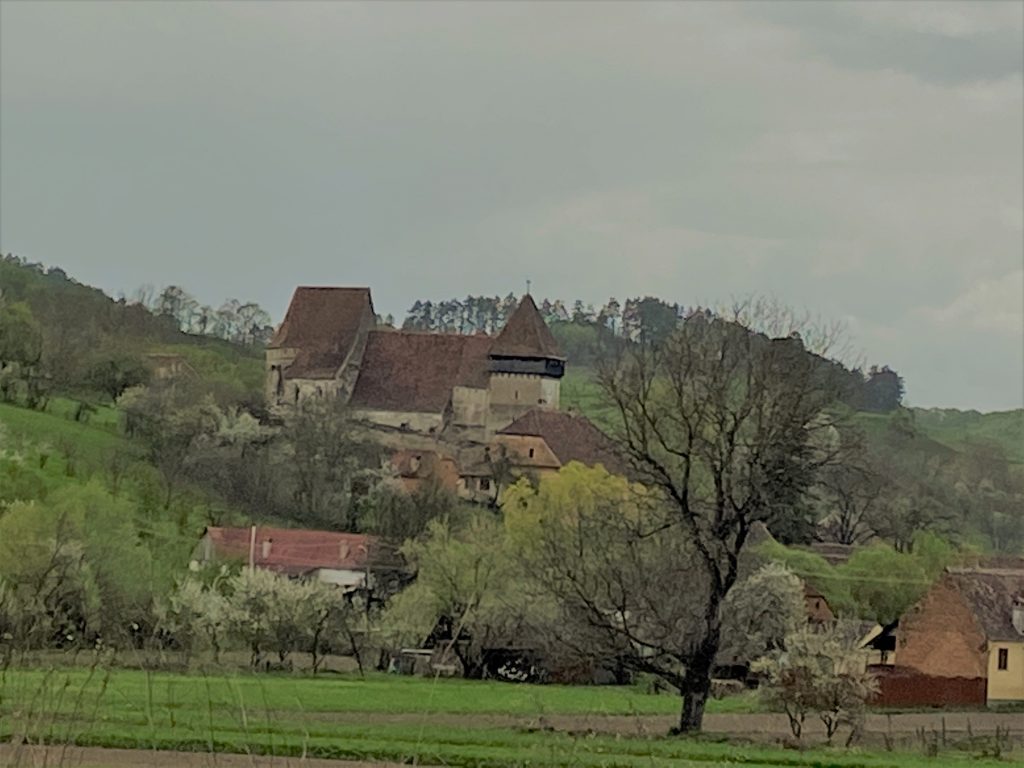
Este mes he podido viajar por Transilvania, una de las regiones que componen Rumanía. Y la experiencia no ha podido ser mas placentera. Es como si este territorio se hubiera parado en el tiempo siglos atrás. Aparte de parajes maravillosos donde se respira paz y sosiego, se encuentran las aldeas con iglesias fortificadas. Construidas desde el siglo XIII al XVI por los colonos alemanes, ¨Sajones¨, que vinieron a repoblar estas tierras. Sus comunidades crearon fortificaciones en torno a sus iglesias, a las cuales añadieron torres defensivas y almacenes que les permitieran conservar sus bienes y les ayudaran a sostener los asedios que se produjeron durante las invasiones Tartaras y Otomanas. Y así han resistido hasta el dia de hoy. Hay cientos de ellas y son autenticas maravillas. Altamente recomendable su visita. En la imagen podeis ver la de Copsa Mare, parece sacada de un cuento… —————oo0oo————— This month I have been travelling through Transylvania, one of the regions that make up Romania. And the experience could not have been more pleasant. It is as if this territory had stopped in time centuries ago. Apart from wonderful places where you can breathe peace and quietness, you can find many villages with magnificent fortified churches. Built between the 13th and 16th centuries by German settlers, knowns as ¨Saxons¨, who came to populate these lands. Their communities created fortifications around their churches, to which they added defensive towers and warehouses that allowed them to preserve their assets and help them sustain the sieges of Tartars and Ottomans. And so they have resisted to this day! There are hundreds of them and they are true wonders. I fully recommend their visit. In the image you can see that of Copsa Mare.
Abril / April 2021. No siempre salen las cosas como uno esperaba…
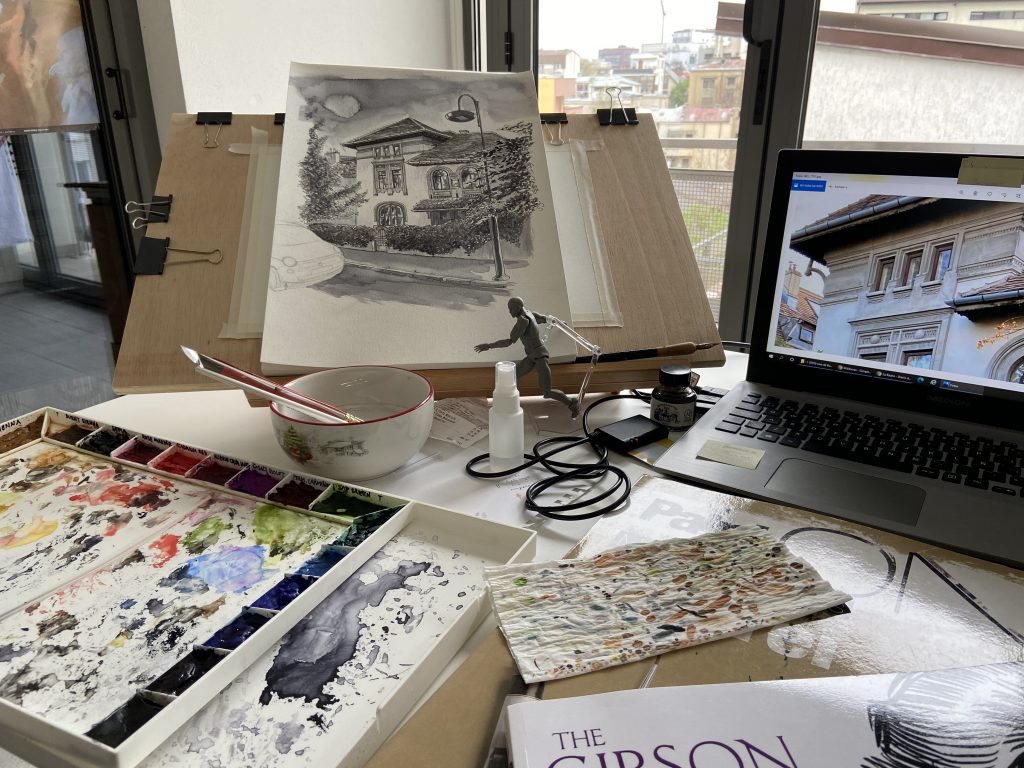
Pues eso, que no siempre salen las cosas como uno esperaba. Cuando ya pensaba que le estaba cogiendo el puntillo a la acuarela, de repente te das un baño de realidad y te caes de la nube. No solo no te sale, sino que te das cuenta de que estas lejos de dar con la magia que tiene esta tecnica. Habia empezado con el primero de una serie de dibujos a plumilla y acuarela, de casas de estilo Brancovenesc o “Renacimiento rumano” y que se pueden ver en algunos barrios de Bucarest. Son verdaderas joyas de una epoca pasada. Y al mismo tiempo habia encontrado un buen motivo para hacer alguna obra de carácter local, como ya he hecho en los distintos paises por donde he pasado. Pues bien, esto no se va a quedar asi… Lo seguiremos intentando las veces que haga falta. ¡La practica hace maestros! —————oo0oo————— Well, it seems that things not always work as expected… Now that I thought I was close to understand watercolor! I not only have not understood this technique yet but I think I am also very far from catching its magic. I had just started with the first of a series of pen & ink + watercolor drawings of some Brancovenesc or «Romanian Renaissance» houses that can be seen in some neighborhoods of Bucharest. They are true jewels of a bygone era. And at the same time I had found a good motive to do some works with local flavour, as I did in the different countries that I have passed trough. Well, this is not going to remain like this! I will have to go ahead and try again and again…. Practice makes masters!
Marzo / March 2021. Dibujo a plumilla
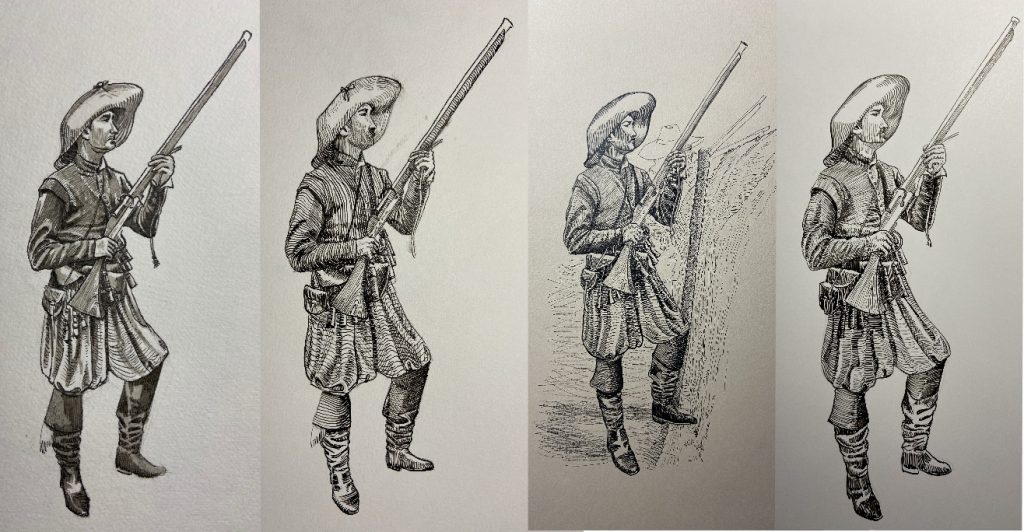
Bueno, pues este mes he recuperado un arte que aparqué en su dia hace ya muchos años. Por alguna razón abrí ese último cajon donde tengo los botes de tinta china y las plumillas y de alguna manera se me quedó una plumilla pegada a la mano. ¡Un momento único! Desde que viví en Mons, hace ya 15 años que no utilizaba esta tecnica. Recuerdo que alli hice una exposicion de escultura y plumillas que tuvo verdadero éxito, de hecho no me queda ningun dibujo a plumilla de aquella época. Posteriormente, hace 5 años, viviendo en Estrasburgo dedique muchas horas al dibujo con tinta, pero a base de rotuladores, será que no abrí ese último cajon entonces… Y la diferencia es grande, la plumilla tiene solera, más magia y la tinta adquiere otro brillo, distinto al que proporciona el rotulador. Bueno, pues para retomar la practica de la plumilla, he estado probando con papeles de distinta textura y ahi teneis el resultado. Espero que os guste. —————oo0oo————— Well, this month I have recovered a technique that I stopped practicing many years ago. For some reason I opened that last drawer where I have the bottles of India ink & the nibs. And somehow one nib got stuck to my hand. What a moment! Since I was living in Mons, what means 15 years ago, I had not taken a nib. At that time I made an exhibition of my sculptures together with my ink & nib drawings that was quite successful, in fact I have no drawings left from that time. Some time later, I mean 5 years ago, while living in Strasbourg, I dedicated many hours to drawing with pen & ink, but not with ink & nib. Perhaps I did not open the correct drawer at that time… And I can see now that the difference is big, the nib has character, more magic and the ink acquires a different shine, very different from the pen. And to get used to it again, I have been practicing with papers of different texture and there you have the result. I hope you like it.
Febrero / February 2021. A destajo.
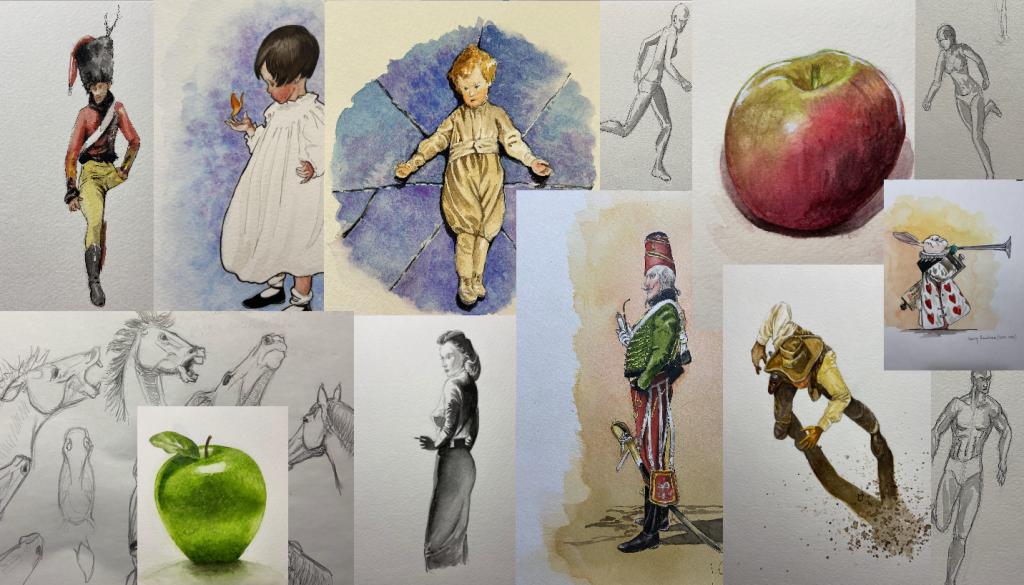
Bueno, pues este mes parece que me he resarcido de los meses que he estado enfrascado con los libros de arte, en lugar de estar manos a la obra. Asi que le he pegado a todo. A la acuarela; del natural o copiando de los maestros. He estado practicando el dibujo de caballos, la figura humana en distintas posiciones… En la imagen podeis ver algunos ejemplos. ¡Vamos, porque febrero es un mes breve, que si no, acabo con todos los cuadernos de dibujo que tengo! Ya tenía ganas… —————oo0oo————— Well, it seems this month I have compensated the months that I have been too busy reading books of art, instead being producing. I have hit everything. From watercolor; painting from life or copying the masters, to practicing the drawing of horses or the human figure in different positions. Thanks God, February has been a short month, if not I would have run out the sketchbooks I have! Looking forward to continue…
Enero / January 2021. Capilla de Empel.

Un año mas, hoy dia 31 de enero, se celebra el “dia de los Tercios”. Una iniciativa con la finalidad de recuperar y divulgar la memoria de aquellas fantasticas unidades que se convirtieron en la mejor Infanteria del mundo y que hicieron imborrable el nombre de España por donde pasaron. Y esto me hace recordar que en los Paises Bajos, en el lugar donde se produjo “el milagro de Empel”, que dió origen a que Maria Inmaculada fuera la patrona de la Infanteria, en la capilla que allí existe, podeís encontrar una figura mía de un soldado de los Tercios. ¡Que más puede pedir uno que fue alferez en el Tercio Viejo de Sicilia y que ademas es escultor! Ahí teneis el documento grafico. “Todas las picas suman, únete al cuadro” —————oo0oo————— Well, one more year, today 31st January, the «day of the Tercios» is celebrated. This is an initiative that aims recovering and disseminating the memory of those fantastic units that became the best infantry in the world and that made the name of Spain indelible throughout the known world. And this makes me remind that in the Netherlands, in the place where “the Miracle of Empel” took place, which gave rise to Mary Immaculate being the Saint Patroness of the Spanish Infantry, in the chapel that nowadays exists there, you can find one of my figures of a soldier of the Tercios. Here you have the graphic document. «All pikes add up, join the ranks!«
Diciembre / December 2020. De nuevo la Navidad…
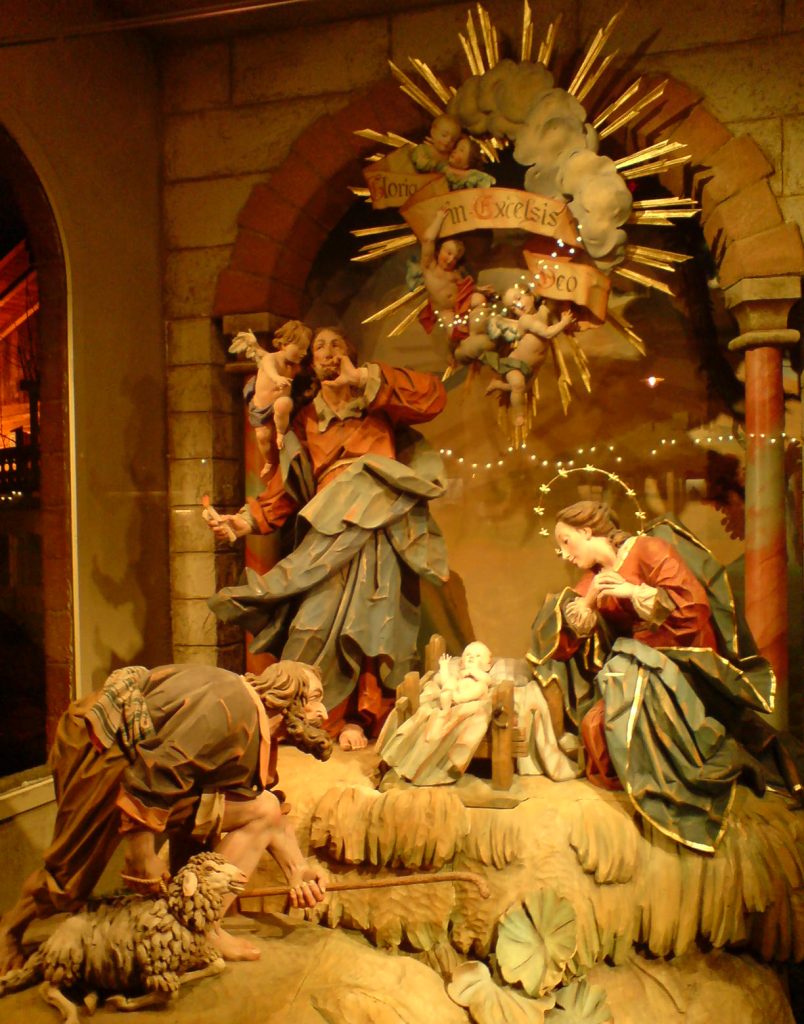
Llevo mas de dos meses enfrascado leyendo y aprendiendo sobre la acuarela a través de libros y tutoriales, y sin darme cuenta, una vez más, nos hemos metido de pleno en la Navidad. Aunque por desgracia, este año se trata de una Navidad extraña, en la que no se podrá disfrutar de muchas de las manifestaciones propias de la misma. En fin, esto es lo que nos ha tocado vivir… Echando la vista atrás, recuerdo este fantástico portal con el que hace ya algunos años nos encontramos en una plaza de Garmisch-Partenkirchen. Era algo realmente espectacular. Imagino que aun a pesar de todo, estará de nuevo allí en estas fechas, iluminando la Navidad en esta época de tinieblas y recordándonos el origen cristiano de nuestra civilización. ¡Feliz Navidad! —————–oo0oo——————- I have been already for more than two months reading and learning about watercolor from different artists, and suddenly, Christmas has arrived once again. Although, unfortunately, during this Christmas period we will not be able to enjoy many of its manifestations. But this is what it is! And we have to cope with it. Looking back, I remember this magnificent Nativity scene that we came across some years ago in a square downtown Garmish-Partenkirchen. It was something amazing! I can imagine that in spite of the current situation, it will be back there, again, lighting up Christmas in this times of darkness and reminding us about the Christian origin of our civilization. Merry Christmas!
Octubre / October 2020. A vueltas con la acuarela…
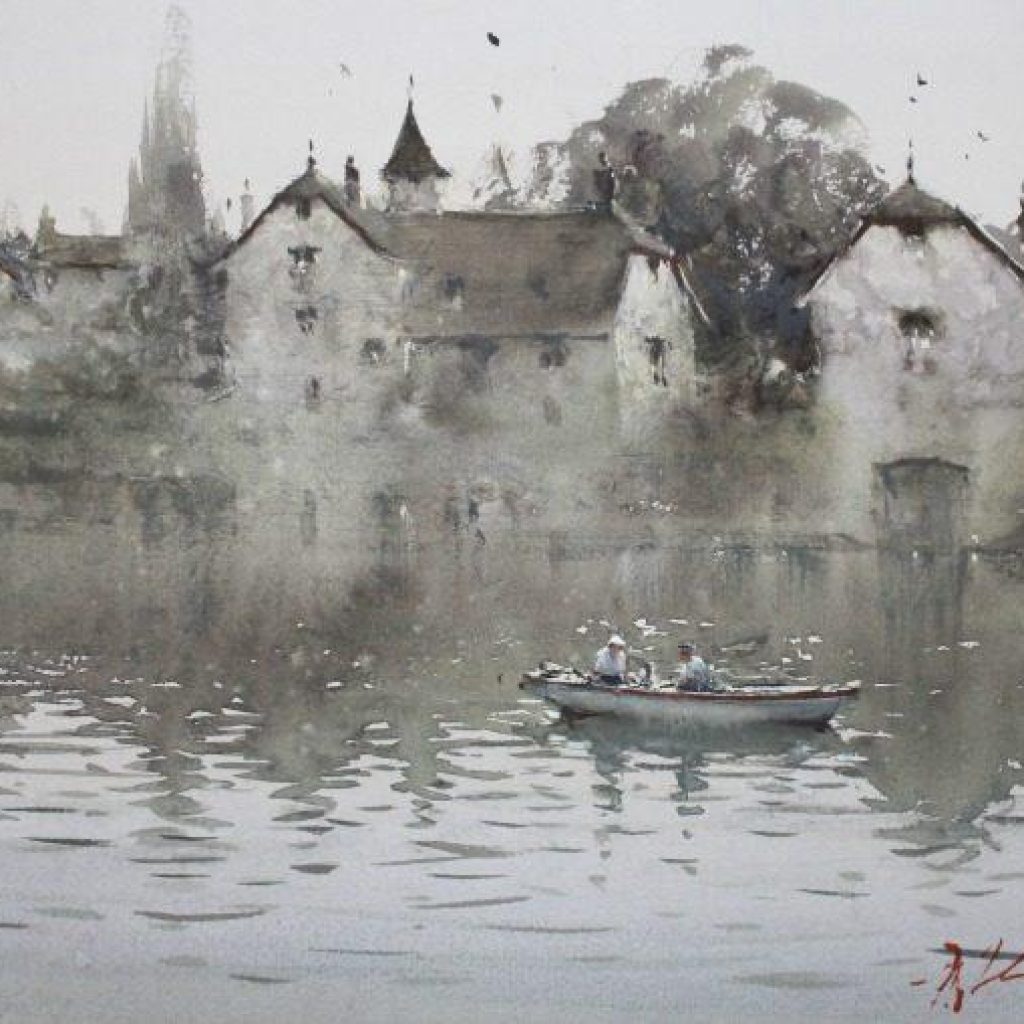
Bueno, pues cuando ya estaba perfectamente asentado en mi nueva ciudad de acogida, con mi atelier en casa listo y estaba preparado para sacar los lapices y pinceles, pues resulta que investigando, he dado con un libro que me tiene embebido. Se trata de “Mastering atmosphere and mood in watercolor” de Joseph Zbukbic (2002), el autor de la imagen de arriba. Este libro me ha hecho darme cuenta de lo lejos que estoy de saber pintar acuarela y de que carezco de una base solida necesaria. La acuarela es una tecnica que tiene no solo una dificultad sino una magia de la que carecen las demás técnicas. Y creo que son esas las razones por las que me atrae de una manera especial. Pues oye, que aquí estoy en mis ratos libres sentado leyendo, releyendo y subrayando el libro, que ademas me ha llevado a abrir dos incunables más que me traje de EEUU y que tenia sin leer; “Watercolor” de John Pike (1974) y “Guide to landscape painting” de John Carlson (1929). ¡Hay que volver siempre a los Clasicos! Espero no seguir desempolvando libros, pues tengo unos cuantos en la estanteria, o voy a perder la practica. ¡Y solo la practica hace maestros! Ahora bien, cuando vuelva a coger los pinceles, mi pintura va a ser distinta. ———–oo0oo———— Well, when I was perfectly settled in a new hosting city, my small atelier at home ready, and I was ready to retake the pencils and brushes, I have found a book that has embedded me. It is about “Mastering atmosphere and mood in watercolor” by Joseph Zbukbic (2002). This book has made me realize how far I am from knowing how to proper paint watercolor and how I lack the needded solid foundation for it. Watercolor is a technique that has not only a special difficulty but also a magic that the others do not have. And I think they make watercolor attract me in such a special way. So here I am in my spare time sitting reading, underlining and rereading the book, which has also led me to open two more books that I have on my shelf; «Watercolor» by John Pike (1974) and «Guide to landscape painting» by John Carlson (1929). There is nothing like learning from the Classics! I hope I don’t keep chaining books or I will lose practice. And only practice makes masters. What I know is that whenever I pick up the brushes again, my painting will be different.
